
This summer, from the National Guard in LA, to the uptick in ICE raids across the country, to the federal takeover of D.C., the people of the United States witnessed an increase in controversial actions from the Trump administration.
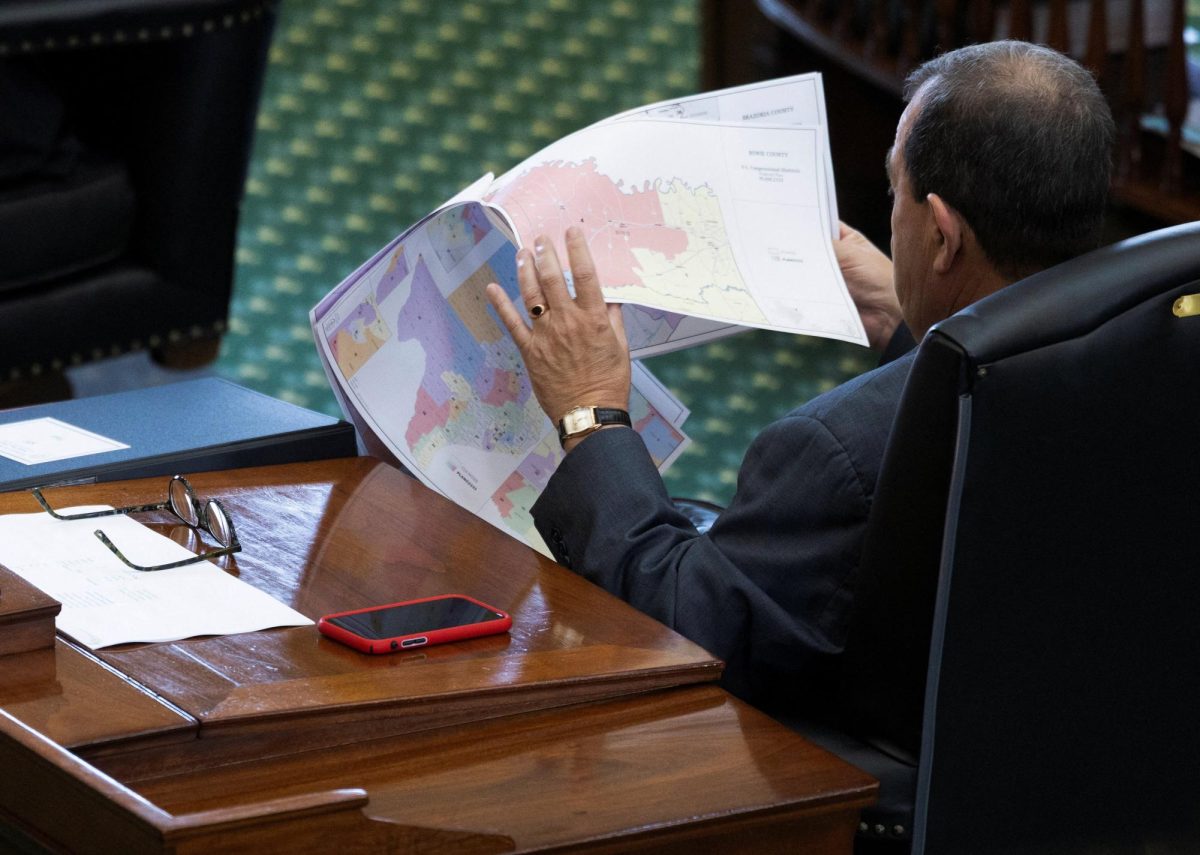
One ongoing controversy has been the redistricting battle. In July, President Trump called Gov. Greg Abbott of Texas and requested that he redraw the congressional maps mid-decade to give the Republicans a five-seat advantage in Congress.
On Aug. 20, the redistricting bill passed the Texas House of Representatives in an 88-52 Republican win, following the return of the Texas Democrats to the state after a two-week walkout. The Senate similarly followed suit, and Abbott signed the bill into law.
“Doing it [redistricting] now calls into question the motives for doing it. It seems more nakedly political. That, to me, is where the danger to the system lies,” said history teacher Jay Konik.
At the same time, California Gov. Gavin Newsom signed a redistricting proposal this August for California in an attempt to nullify any Republican gains in Texas. This is going on the California ballot in November for the people to vote on.
“They fired the first shot in Texas. When all things are equal, [when] we’re all playing by the same set of rules, there’s no question that the Republican Party will be the minority party in the House of Representatives next year,” Newsom said at the signing ceremony.
The map redraws the lines of California’s 1st, 3rd, 22nd, 41st and 48th districts — mostly districts away from coastal Democratic control and currently controlled by Republicans.
The lines will be redrawn to include large Democratic concentrations to give them an advantage, similar to Texas, where the current Democratic districts will be redrawn to become +50 Trump districts.
“If the districting in that state does not reflect the actual makeup of that state, then it is not doing its job,” said history teacher Thomas Apel.
Other states are expected to join this standoff. For the GOP, Indiana, Missouri and Ohio are all expected to redraw their maps. According to The New York Times, with all these advantages being given to the Republicans, the 2026 midterms would not be an automatic win for the GOP, but the race would certainly be more competitive. The Democrats would need to have a 2- to 3-point lead in the national popular vote, with current polls suggesting they hold a 4-point lead in the generic congressional ballot.
All over the country right now, with the Epstein controversy still lingering and the passage of the “Big, Beautiful Bill,” many are upset with the Trump administration’s handling of the country. This is shown in the town hall meetings many GOP representatives are having with their constituents.
In Chico on Aug. 11, U.S. Rep. Doug LaMalfa — whose seat is currently in jeopardy for the 2026 midterms based on the new map — had a meeting with his constituents where, for nearly 90 minutes, they constantly interrupted him with comments on the new cuts to Medicaid, which affect many in his district.
“I wish the courts would offer a decisive answer and guideline for how it should be done. It is definitely going to benefit Republican states more than the blue states,” Apel said.
Ever since this battle over redistricting began, numerous lawsuits have been filed on claims of racial discrimination by organizations like the League of United Latin American Citizens (LULAC), the NAACP and the Mexican American Legal Defense and Educational Fund (MALDEF), all claiming the new map violates the Equal Protection Clause of the U.S. Constitution.
“The state’s intent here is to reduce the members of Congress who represent Black communities, and that, in and of itself, is unconstitutional,” said Derrick Johnson, president and CEO of the NAACP.
While this battle is unprecedented, the bottom line is that democracy depends on equal representation. If redistricting becomes a political tool, then the people’s power to rule themselves is at stake.