






























For the first time in more than 50 years, humans have traveled outside Earth’s orbit on their way to the moon. The recent NASA mission titled Artemis II was the first flight in decades into deep space.
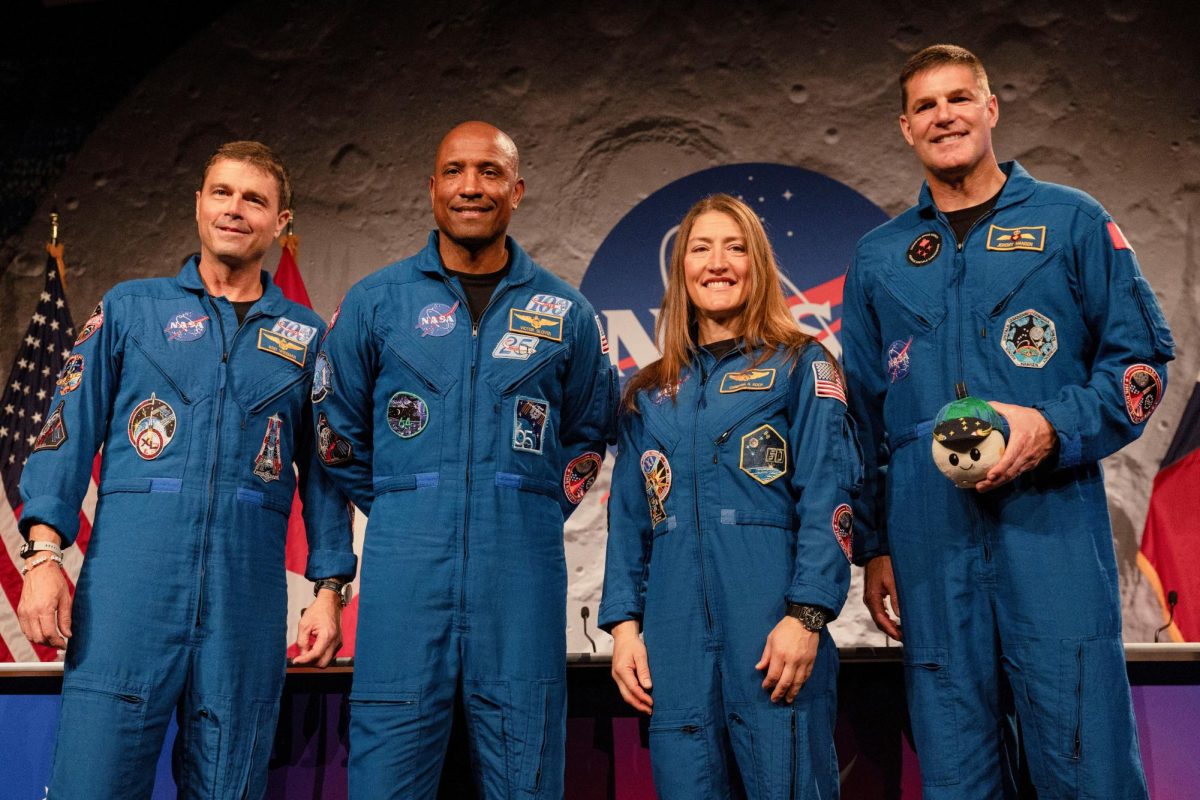
On April 1, 2026, NASA sent four astronauts — Reid Wiseman, Victor Glover, Christina Koch and Jeremy Hansen — on a journey that took 10 days to complete. This is the first crewed mission to travel this far since the Apollo 17 moon landing in 1972. The crew traveled more than 1 million kilometers (about 620,000 miles), flying around the far side of the moon before returning home. This made them the farthest-traveling humans in history.
Unlike earlier Apollo missions, Artemis II is not focused on landing astronauts on the moon. Instead, its primary purpose is to test critical systems needed for future missions. These include life-support systems, navigation and communication technologies that must function reliably in deep space before NASA attempts a lunar landing.
The mission also created major milestones, as Koch became the first woman to travel around the moon, Glover the first Black astronaut to do so and Hansen the first Canadian to take part in a lunar mission. This reflects how NASA aims to make space exploration more inclusive and globally cooperative.
One of the most dangerous parts of the mission came toward the end of the trip, during reentry into Earth’s atmosphere. As the Orion spacecraft traveled at speeds close to 25,000 mph, it had to withstand extreme temperatures of around 5,000 degrees on its way home. On April 10, 2026, the spacecraft successfully splashed down in the Pacific Ocean, safely returning the crew to Earth. This successful return showed that astronauts can safely return from deep-space missions.
Artemis II builds on the success of Artemis I and prepares the way for Artemis III, which aims to land astronauts on the moon’s surface for the first time in decades. Artemis II is more than a mission; it represents the beginning of humanity’s return to the moon and a stepping stone toward future missions to Mars. Artemis II proves that deep-space exploration is not just history but is being made possible again today.