



























Every day at school, we throw things away without really thinking about it. Lunch ends, we stand up, and in a few seconds everything is gone into a bin. We all know there are times when we forget which bin to throw our trash in, so we toss everything into recycling without a second thought. But that moment actually matters a lot more than we think.
The choices we make at that moment — what goes into compost, recycling or trash — have a real impact on the environment and on our own school community.
As members of Convent and Stuart Hall, we all share the same spaces, and we have a responsibility to our community to properly dispose of our food, wrappers and trash.
Our school has already done something really important by switching over to all reusable or fully compostable eating materials.
At the Pine campus, we are provided reusable plates, utensils and cups. It is fairly straightforward to throw any leftover food into the compost before returning all eating materials to the cafeteria.
At the Broadway campus, we are provided materials that are all compostable. Our cups, for example, are made out of eco-friendly, plant-based alternatives instead of petroleum plastic. We’ve been given a system that actually works if we use it correctly. But it only works if we’re paying attention.
Why This Actually Matters
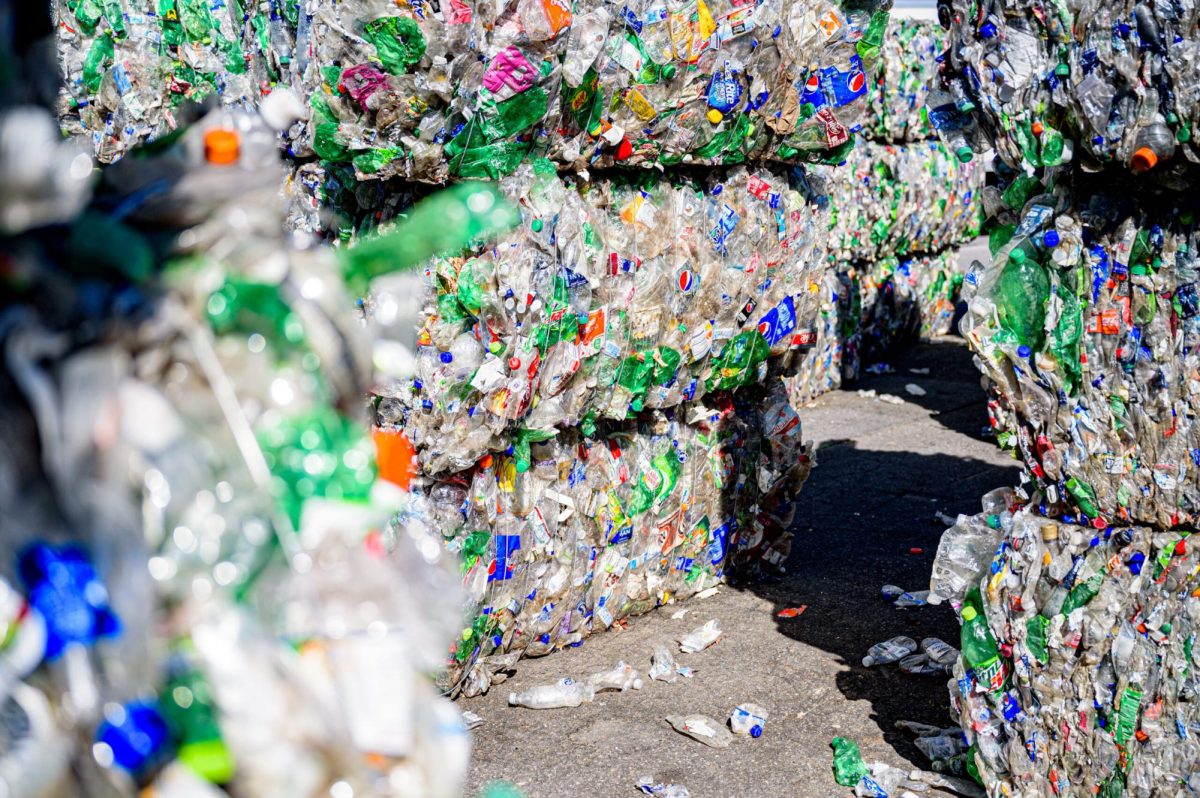
It’s easy to think that one mistake doesn’t really matter and that you’re neither contributing nor hurting anybody. But one cup in the wrong bin, or one plate tossed into recycling — when you multiply that by hundreds of students every single day — those small, insignificant mistakes turn into a serious problem.
According to the Environmental Protection Agency, the average person produces about 4.9 pounds of waste per day. That means our school community is generating a massive amount of waste daily. If even small amounts of garbage are sorted incorrectly, it can really hurt the system we’ve been given.
When compostable items are thrown into the trash, they don’t break down properly. They end up in landfills where they release dangerous chemicals like methane, a greenhouse gas that is far more harmful than carbon dioxide. On the other hand, when those same materials are composted correctly, they turn into fertilizers that can actually help grow new food and support ecosystems.
The system only works if we actually follow it:
- A compostable cup in the recycling bin can’t be processed properly.
- A plastic wrapper in the compost bin can create non-biodegradable waste and can ruin the fertilizer.
- One contaminated bin can result in everything being useless.
That means even if most people are doing the right thing, a few careless moments can cancel out the effort of everyone else.
In addition, this isn’t just about the environment. When waste is sorted incorrectly, it becomes more expensive to handle. Contaminated compost and recycling can get rejected and sent to landfills, which increases disposal costs. Annually, the U.S. spends an extra $3.5 billion unnecessarily. Convent and Stuart Hall is also fined whenever there is improper disposal, leading to unnecessary costs for our administration. It has gotten to the point where our staff members are sifting through our garbage to ensure proper disposal.
What We Can Do
This isn’t about being perfect. Everyone forgets sometimes. But it is about trying to be better every day and being more aware of the consequences of our actions.
Take an extra second before throwing something away.
Think about what you’re holding and if it is hurting our environment.
Use compost whenever possible.
Check where you should throw items away instead of guessing.
And just as importantly, if you see someone about to throw something in the wrong bin, a quick reminder can make a difference.
Our school has already done the most difficult part by creating a system that actually makes sustainability possible. Now it’s up to us students to make it successful.
So next time you finish lunch, don’t just throw everything away in a random bin automatically. Take a second and make the right choice.